
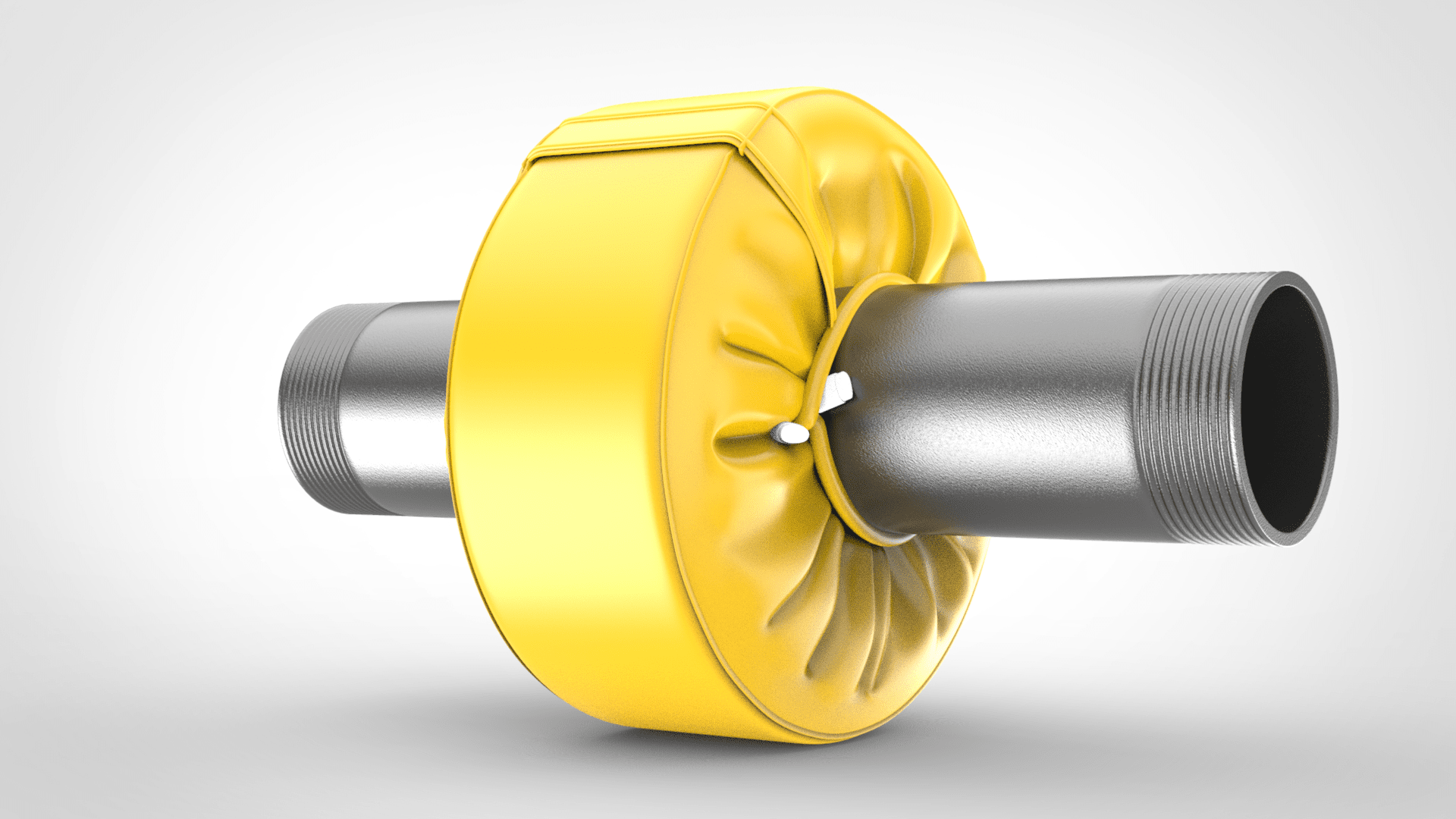
Industrial safety engineering has long treated flange guard s as passive barriers—static shields bolted over pipe joints to contain spray-out hazards. This conventional wisdom, however, is fundamentally incomplete. A growing cohort of reliability engineers and safety auditors is advancing a contrarian thesis: the most effective flange guards are not inert at all. They are “lively”—instrumented, adaptive, and data-generating components that actively participate in asset integrity management. Examining lively flange guards requires abandoning the assumption that protection and monitoring are separate disciplines. This article dissects that convergence, the statistics driving it, and why mainstream procurement practices are lagging behind the physics.
Redefining the Flange Guard Category
The term “lively flange guard” describes a guard system engineered with integrated sensing, ventilation, or thermal-management functionality rather than simple containment geometry. Traditional guards address one failure mode: pressurized spray or jet fire from gasket breach. Lively guards address the same hazard while simultaneously capturing diagnostic data—surface temperature, vibration signatures, leak-detection conductivity, or strain at the flange bolting interface. In effect, the guard becomes a permanent, non-intrusive condition-monitoring node that happens to also satisfy OSHA and API containment requirements.
This dual function matters because the flange remains one of the least instrumented points in a process line. Manual inspection routes cover a fraction of joints, and many flanges sit in elevated, insulated, or confined locations where visual rounds are impractical. A lively guard closes that blind spot without requiring hot-work permits, scaffolding, or shutdown windows.
The Statistics Reshaping the Argument
Recent industry data strengthens the case considerably. Analysis of process safety incident databases for 2024–2025 indicates that flange and bolted-connection failures account for roughly 20 to 25 percent of reported loss-of-containment events in hydrocarbon processing, and gasket degradation remains the single largest contributor within that category. Meanwhile, survey data from reliability-focused operators shows that fewer than one in five critical flanges receives any form of continuous condition monitoring, despite flanges representing a disproportionate share of leak paths.
What do these figures mean for the industry? They reveal a structural asymmetry: the components most likely to fail are the least observed. Static guards mitigate consequences but do nothing to shift the failure probability curve. Lively guards attack both sides of the risk equation—containment on the consequence axis, early detection on the likelihood axis. When auditors apply layer-of-protection analysis, an instrumented guard can credibly claim credit as an independent protection layer, something a passive shield cannot. That distinction has direct capital-allocation consequences, because it can reduce required inspection frequency elsewhere in the system.
Why Procurement Resists the Shift
The resistance is predictable and instructive. Buyers compare unit cost, and a lively guard can carry a price premium of two to four times a conventional shield. This comparison, however, is an accounting error. It ignores the avoided cost of manual inspection labor, the eliminated scaffolding campaigns, and the insurance and compliance value of documented continuous monitoring. A single avoided loss-of-containment event typically dwarfs the lifetime cost delta across an entire flange population.
- Passive guard: capital cost low, lifecycle visibility zero, no credit in risk-based inspection programs.
- Lively guard: higher capital cost, continuous data stream, quantifiable credit in mechanical integrity audits.
- Hidden cost of the status quo: repeat inspection labor, unplanned intervention, and undetected gasket degradation.
Standards bodies have not yet fully codified instrumented guards, which gives conservative specifiers an excuse to default to legacy designs. Forward-leaning operators are instead writing internal specifications that treat sensor-enabled guards as preferred equipment for high-consequence flanges, particularly in hydrogen service and high-pressure steam applications where small leaks escalate rapidly.
Engineering Considerations for Deployment
Deploying lively guards demands rigor that passive shields never required. The guard must not compromise the very joint it protects, and its electronics must survive the environment they are meant to monitor. Practitioners should prioritize the following technical criteria.
- Chemical compatibility of the guard shell with the specific process fluid and expected spray temperature.
- Sensor survivability ratings against vibration, thermal cycling, and washdown conditions.
- Non-intrusive installation that preserves bolting torque and gasket compression integrity.
- Data output compatibility with existing distributed control and asset management platforms.
- Retrofit feasibility across mixed flange standards and insulation configurations.
Equally important is data governance. A lively guard that generates